Milestones
![[Translate to English:]](/fileadmin/ueber-uns/Content_Hub_Nachhaltigkeit/Header_Meilensteine_.jpg "[Translate to English:]")
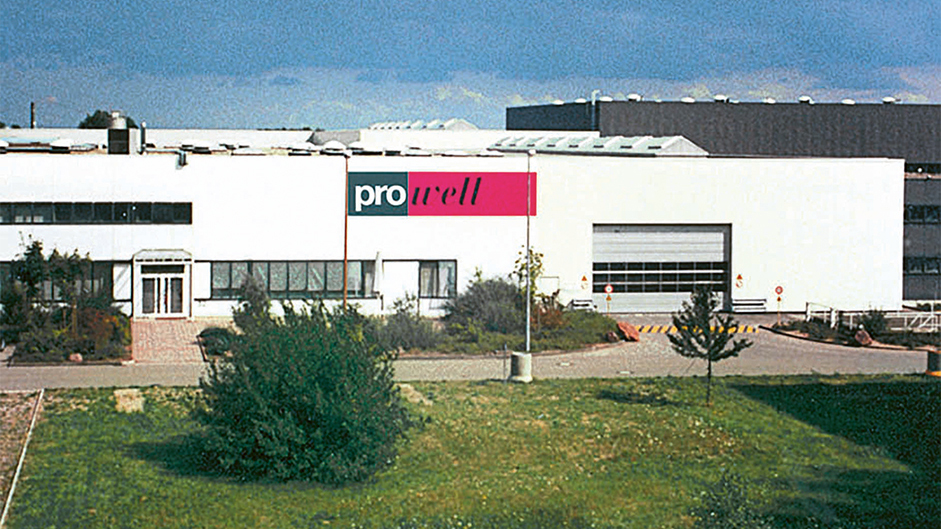
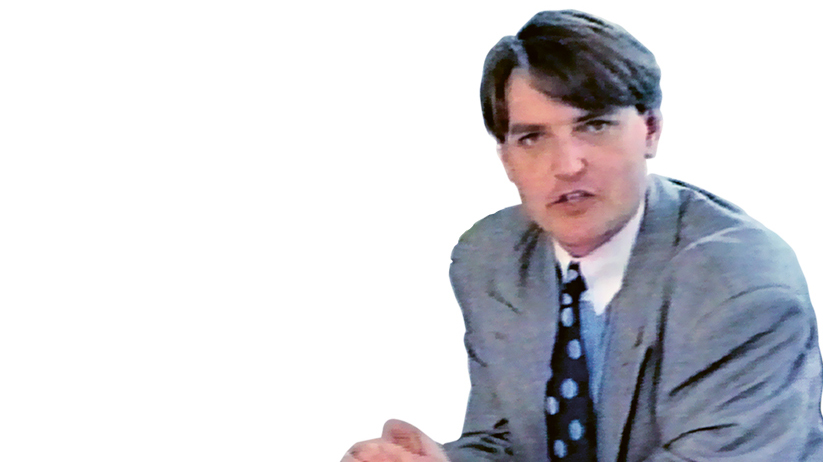
Start of a success story: Jürgen Heindl founded Prowell and set himself no less a goal than revolutionising the corrugated board market. His strategy was based on two pillars. Firstly, consistently implementing his greenfield strategy, so ensuring that all production facilities and machines were state-of-the-art and built on greenfield sites. And secondly, having consistent links with customers and suppliers.
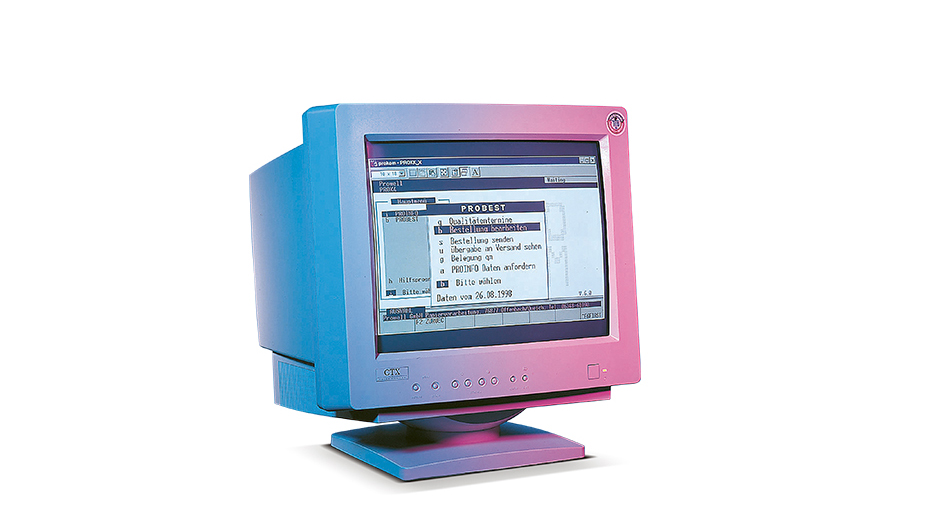
Right from day one, the system that was installed was connected to an online ordering service and was the forerunner to the 4.0. approach that Progroup has today: Jürgen Heindl wanted to manufacture corrugated board sheets – and therefore a bulk commodity – using the very latest technology so that his customers could procure even very small orders just-in-time, at low cost and reliably. In particular, he wanted to supply medium-sized packaging manufacturers in Central Europe that did not produce their own corrugated board. To assuage the worries of potential customers that Progroup might grow into a new competitor for them, the company's founder gave a promise that still holds true today: “We will never produce packaging ourselves.”
Jürgen Heindl’s strategy worked. Today the corporate group has production sites in Germany, France, the Czech Republic, Poland, the UK and Italy.
Progroup now operates three paper factories, one CHP plant and twelve corrugated sheetfeeder plants. Then there is also a logistics company. With more than 1,500 employees, the company generated sales of more than 1.3 billion euros in 2021.
The company has been a stock corporation since 2007. At the turn of 2022/2023, Jürgen Heindl will hand over the role of CEO to his son Maximilian.
Partnership rather than competition: Once Jürgen Heindl had successfully started his company, he was looking for new approaches to make customers more competitive, avoid transport costs and enable deliveries to be made even more reliably, flexibly and faster. Heindl’s forward-looking idea led to the development of the innovative packaging park concept.
He offered his customers the opportunity to construct their plant right next to a corrugated board plant. The aim was to automate deliveries to the customer as much as possible. This would save time and deliver cost benefits to give the customer greater flexibility and therefore a clear competitive advantage. Jürgen Heindl was convinced that this in turn would also accelerate Progroup's growth.
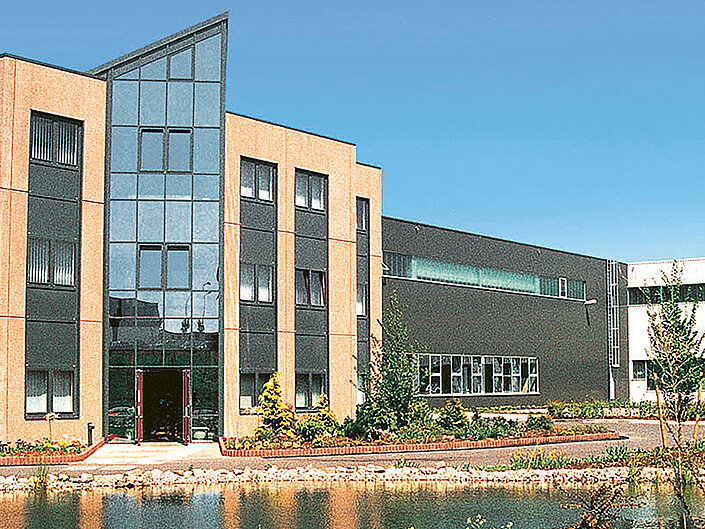
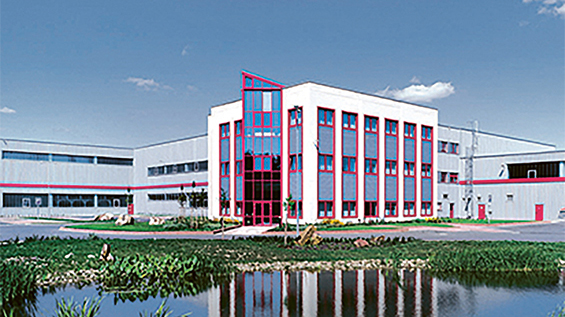
And this innovative concept succeeded too. The model was implemented for the first time in 1998 with the construction of the third corrugated sheetfeeder plant PW03 in Burg near Magdeburg and optimised eight years later at Schüttorf, Lower Saxony. Another packaging park was also constructed a year later in Offenbach an der Queich.
Another development step was the packaging park II model in which Progroup constructs a corrugated sheetboard plant at its customer’s site. This combined model is created through integration with an existing site. It is noted for having a state-of-the-art intralogistics system and was first implemented in 2015 in Plößberg in Germany's Upper Palatinate region.
Backward integration as a winning formula: The construction of the first paper machine PM1 and the establishment of the new company Propapier was further evidence of Jürgen Heindl’s entrepreneurial courage and true vision. He recognised early on that he needed to make himself more independent from an ever more volatile paper market. After all, paper accounts for around 70 per cent of the costs of corrugated board production.
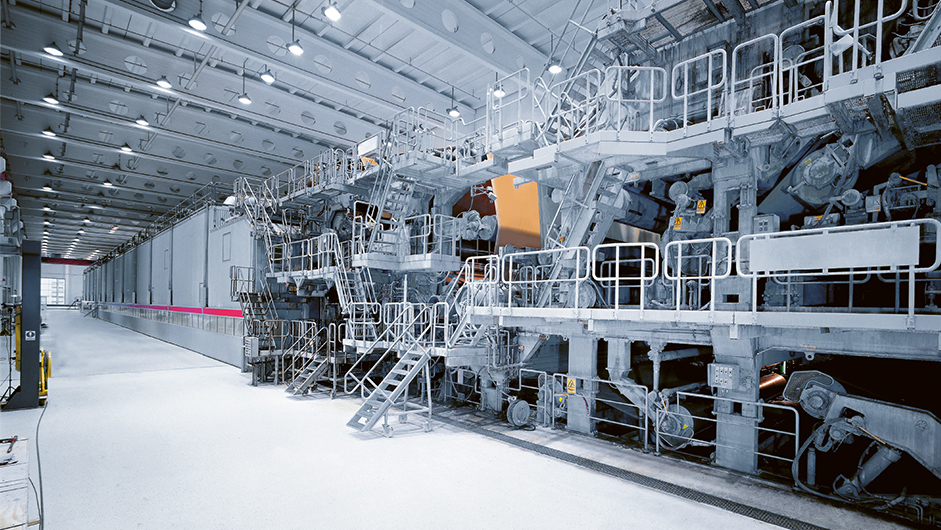
As ever, Jürgen Heindl did not do things by halves. In Burg near Magdeburg, he constructed what was at the time the world's fastest liner paper machine with a speed of 1,300 to 1,500 metres per minute and an annual capacity of 450,000 tonnes of containerboard. This form of paper production using a closed water cycle, which was unique at the time, enabled Progroup to extend its technological leadership. It set completely new standards when it came to sustainability in the production of containerboard based on recovered paper.
Progroup now operates three paper machines. Besides the machine in Burg, there is also one in Eisenhüttenstadt and, since July 2020, in Sandersdorf-Brehna, Saxony Anhalt as well.
Jürgen Heindl achieved another technical breakthrough with the construction of the fourth corrugated sheetfeeder plant in Rokycany, Czech Republic: It was the first time that a corrugator machine had manufactured products with a machine width of 3.35 metres rather than the industry-standard widths of 2.50 or 2.80 metres.
It started operating on 3 June 2002 as scheduled – and boosted Progroup’s productivity by 35 per cent compared to its rivals in the market. Heindl unveiled this world first by video link to an astonished industry at the world's most important “Corrugated” trade fair in Paris.
Heindl established Progroup Logistics in the same year. The company’s own shipping operation also secures the company's internal supply chain: The paper factories receive a reliable supply of recovered paper as the raw material, and the corrugated sheetfeeder plants receive the containerboard they require. The foundation of Progroup Logistics was thus a key milestone in the family-run company's success story.
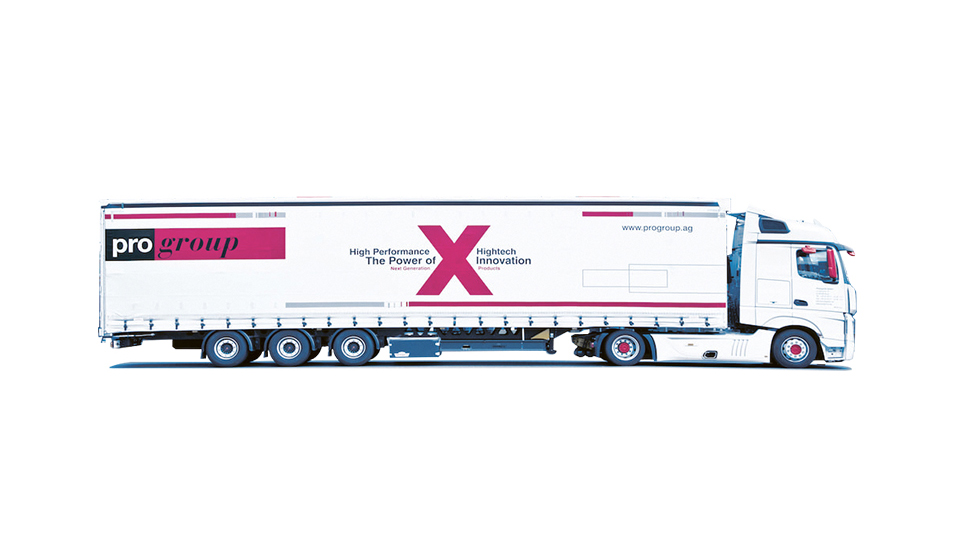
Progroup Logistics uses optimised semi-trailers to make efficient use of the cargo space that exists in the trucks. They have an internal height of three metres and a lifting roof as well as a loading length of up to 15 metres. This means they can transport up to six paper reels, with a width of 3.35 metres and a weight of about four tonnes each. This is equivalent to a total payload of up to 25 tonnes.
Another key point in Progroup’s growth story: Although Poland was not the first country in Eastern Europe that Progroup invested in, it has now developed to become one of Progroup’s most important sites outside of Germany. The corrugated sheetfeeder plant in Stryków, which started operating in 2009, was at the time the biggest in Poland and one of the most productive in Europe, today producing up to 170,000 tonnes of corrugated board with a working width of 3.35 metres and an operating speed of 400 metres per minute.
Just in time to mark Progroup's 25th anniversary, Jürgen Heindl established the second production site in south-west Poland: Trzcinica. The emphasis here was on quickly establishing a packaging park II model. This site saw ambitious championing of digitisation and networking with the partner company. The success of this is reflected in the long-standing and extremely successful working relationship with the customer Janmar (see page 42).Energy efficiency and conserving the environment have also played a central role in all considerations here.
Along with the site in Rokycany in the Czech Republic, Progroup is thus able to supply corrugated board sheets to the whole of the Eastern European market but also southern Germany and Austria. By supplying the markets in Eastern Europe, the company has also been able to expand its business activities throughout Central Europe.
Consistent implementation of the Green Hightech strategy: Following the backward integration with the paper machines, Jürgen Heindl embarked on the next step in strengthening Progroup's independence. He founded Propower GmbH and added a CHP plant to the Eisenhüttenstadt site. It utilises the waste materials that are produced at the plant and supplies steam and power to the PM2 paper machine. This has also reduced the company’s dependence on fossil fuels. This was a highly prescient decision, and this is now becoming very apparent.
The Eisenhüttenstadt site already played a key role in delivering Progroup’s clear sustainability targets. The concept of the PM2 paper machine heralded the start of the path to the company producing papers that conserve resources. This innovative generation of machine manufactures lightweight containerboard with grammages of between 70 and 130 g/m² with high productivity. The technically and economically optimised production process results in lightweights with the finest product characteristics: Then nextfibre® containerboard delivers the best surface finish and strength figures with less use of fibres. Its outstanding processing properties make it the ideal base material for making the best-performing corrugated board sheets.
Setting the right course at an early stage: Progroup's aim is to use its unique business model to have a lasting impact on the market over the long term. This close link across the generations guarantees that customers, employees and partners can carry on benefiting from Progroup’s continuity and reliability. At the turn of 2022/2023, Jürgen Heindl will hand over the role of CEO to his son Maximilian and join the Supervisory Board. The success story continues.